

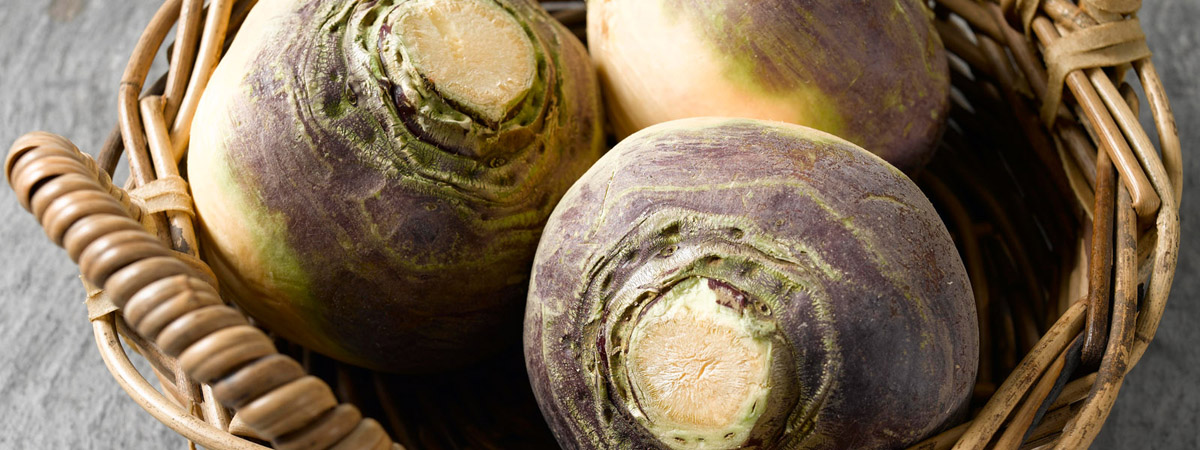
Swede
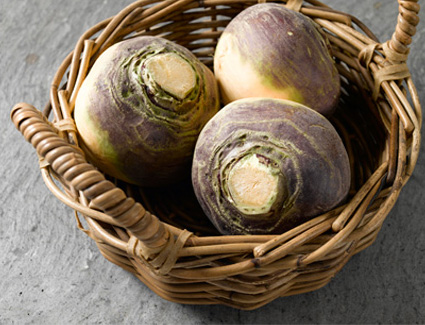

Swede
Although the part of the swede we eat is not green, it is still from the same family as the rest of our greens.
It is a root vegetable which is a cross between a cabbage and a turnip, thought to have originated from Scandinavia or Russia and introduced to England around the end of the 18th century.
The phrase never judge by appearances is never more appropriate than for swede – its rough, slightly purple exterior hides the golden, sweet tasting flesh inside. A delicious addition to casseroles and soups, swede is great for cooking on a budget as it’ll make your meat go further, while giving the dish its own special flavour.
Buying and storing
Look for firm, solid swede – some marks on the exterior are normal.
Frequently Asked Questions
What is swede?
Swede is a root vegetable from the same family as our greens – a cross between a cabbage and a turnip. Its rough, slightly purple exterior hides golden, sweet-tasting flesh inside.
When is British swede in season?
Swede is available year round.
How do you cook swede?
Peel and chop, then steam or boil diced swede and serve mashed on its own or with potato and carrots. Roasting concentrates its sweet flavour – toss in a little oil, season and roast for around 30 minutes. Swede also makes a tasty mash topping for shepherd’s, cottage or fish pie.
How do you choose swede?
Look for firm, solid swede. Some marks on the exterior are normal.
What goes well with swede?
Swede loves butter, black pepper and parmesan, as well as other root vegetables such as carrots and parsnips.
Where does swede come from?
Swede is thought to have originated in Scandinavia or Russia and was introduced to England around the end of the 18th century.

VIEW THIS RECIPE >

VIEW THIS RECIPE >
VIEW THIS RECIPE >

VIEW THIS RECIPE >

VIEW THIS RECIPE >